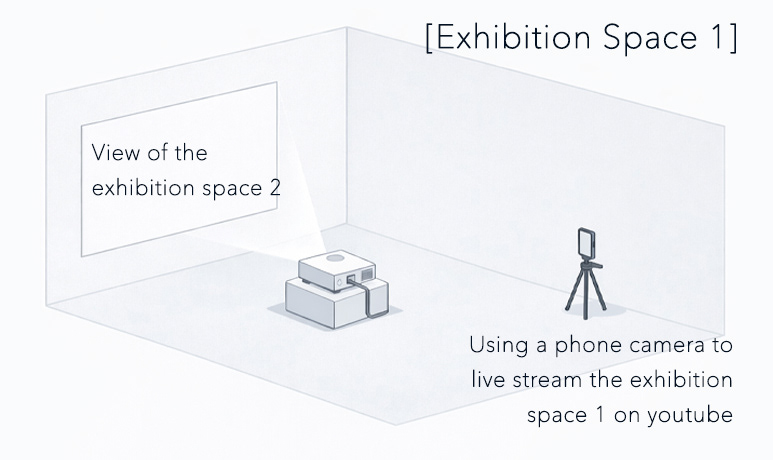
In both the Seoul and Leipzig venues, diverse and experimental works utilizing this dual exhibition format was presented. Each space streamed its exhibition live to the other in real time: the live feed from Seoul was projected onto a wall in Leipzig, and vice versa. Although physically separated, the two venues were visually connected, creating the sense of a shared, unified space. Each venue thus served not only as a physical site for installation, but also as a ‘transmission station’ that virtually links the two.
Within this expanded mixed-reality setting, viewers were able to navigate between both spaces in real time, interact with them, or experience all the works from either locations. A camera installed on a track continuously streamed the exhibition 24 hours a day. The physical venues remained closed to the public while being virtually accessible, revealing a non-interactive space in which no visitors are present and only the works remain illuminated. This setup dissolved physical separation while exposing, in raw form, the contingencies, interactions, and sensory collisions that occurred within it.
Viewers also had the ability to rewind the live stream to revisit past moments, expanding the simultaneity of live broadcasting into the asynchronicity characteristic of new media. This ‘making the invisible visible’ further destabilized the boundaries of time and space.
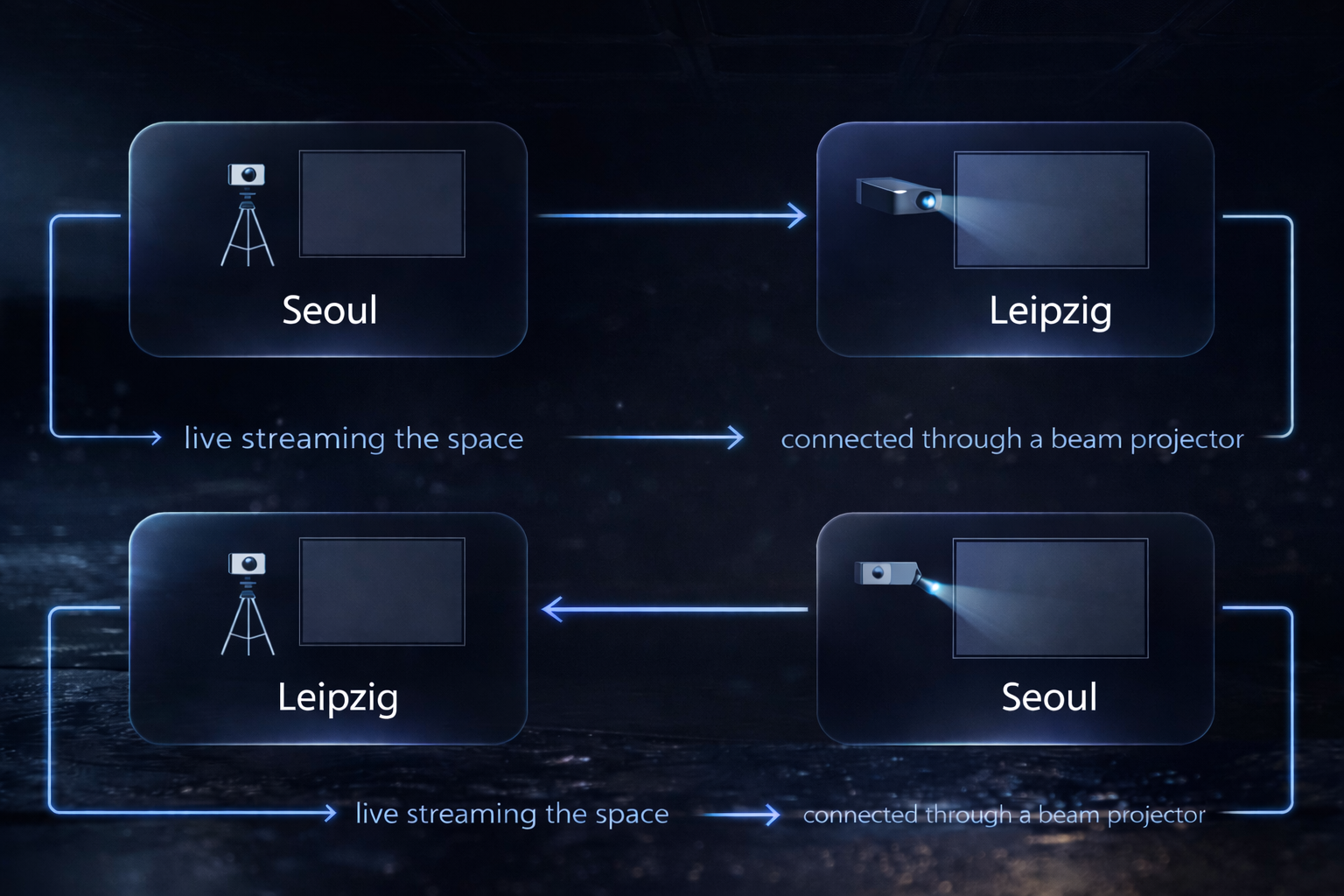
Live Streaming Setup

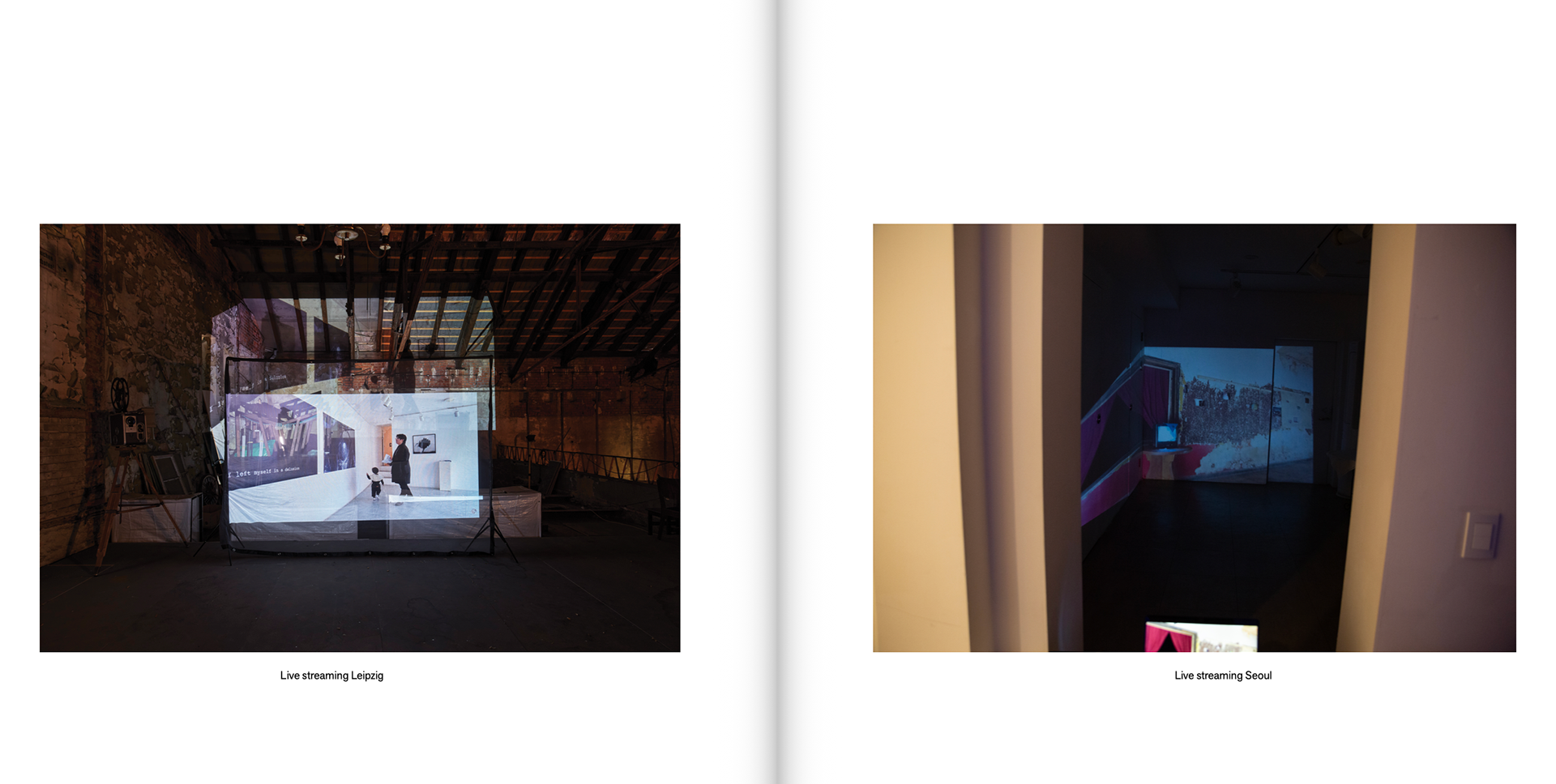
We experimented with this format, and one of the main challenges we encountered was that a basic technical infrastructure is still necessary for a 24-hour live stream. The Leipzig exhibition space had no heating system, which made it difficult for electronic devices to function properly in winter, and installing a stable internet connection was also challenging, creating many obstacles. We first connected all devices to the network using mobile SIM cards. In order to prevent the circuit breakers from repeatedly shutting off, we had to minimize the operation of electronic equipment as much as possible. Unfortunately, during the night the streaming often stopped due to low temperatures, and the experiment ultimately served to confirm the format’s potential. With the technical feasibility now verified, thenest phase will further develop this format into a more interactive exhibition that allows participants to engage across time and space.
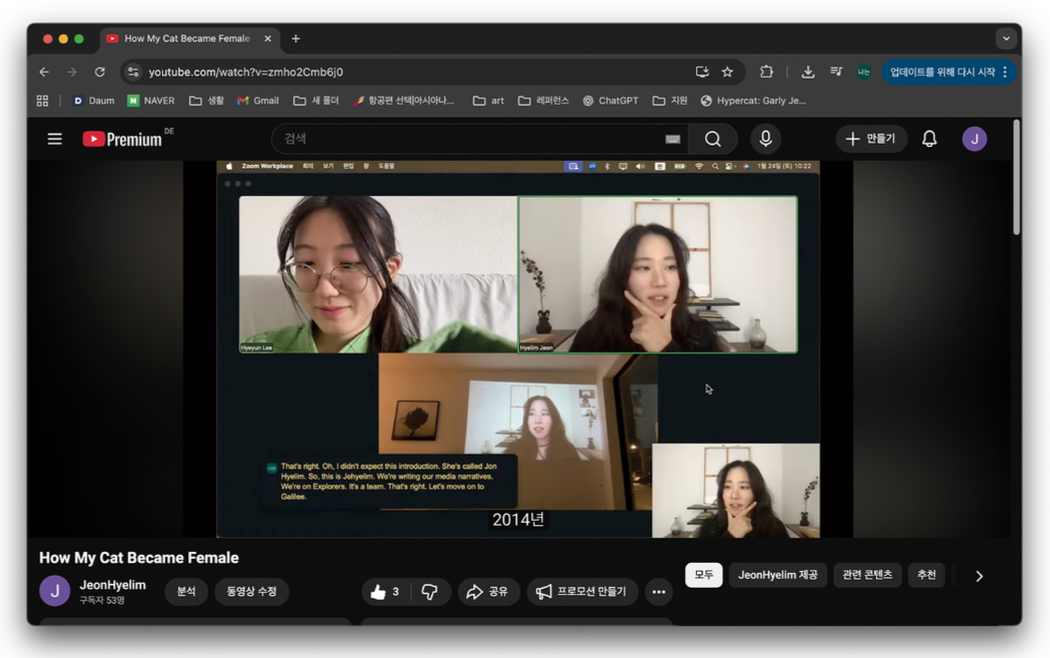
This Exploration was not only a experiment with a simultaneous live-streaming format connecting two exhibition spaces, but also included a technical experiment with real-time AI interpretation between two countries using different languages, exploring to what extent physical limitations can be overcome.