Artists: Hyelim Jeon, Yunju Shin
Documentation: Yunju Shin, Maha Kim
Installation support : Yelim Jeon, Donghyeon Lee
Seoul Exhibition Venue:
Art Space Qualia, 41, Pyeongchang 11-gil, Jongno-gu, Seoul, Republic of Korea
Leipzig Exhibition Venue:
IG Fortuna, Eisenbahnstraße 162, 04315 Leipzig
Exhibition: 23–30 January 2026
Linked Program: 23-29 January 2026
Exhibition Framework
This exhibition marks the third research presentation of Project Media Narrative Explorers, continuing an experimental practice that investigates narrative structures in Korean media culture and mediatic cognitive systems. Taking their lives in two geographically distinct cities—Seoul and Leipzig—as points of departure, Hyelim Jeon and Yunju Shin explore experiences in which time and space are misaligned yet closely interconnected through an online live-streaming exhibition format. Through differing narrative strategies and media languages, the artists reveal how physical distance and mediatic contexts are inscribed in, and transmitted through, individual memory, sensation, and emotion.
The exhibition brings these practices together through the concept of liveness. Like a river that mediates time and space while flowing in an irreversible and contingent manner, liveness signifies a present in which separation and connection, continuity and disappearance, operate simultaneously. This transformation has become embedded in digital media culture—particularly through real-time streaming and multi-platform circulation—reshaping not only media practices but also human cognition and modes of being.
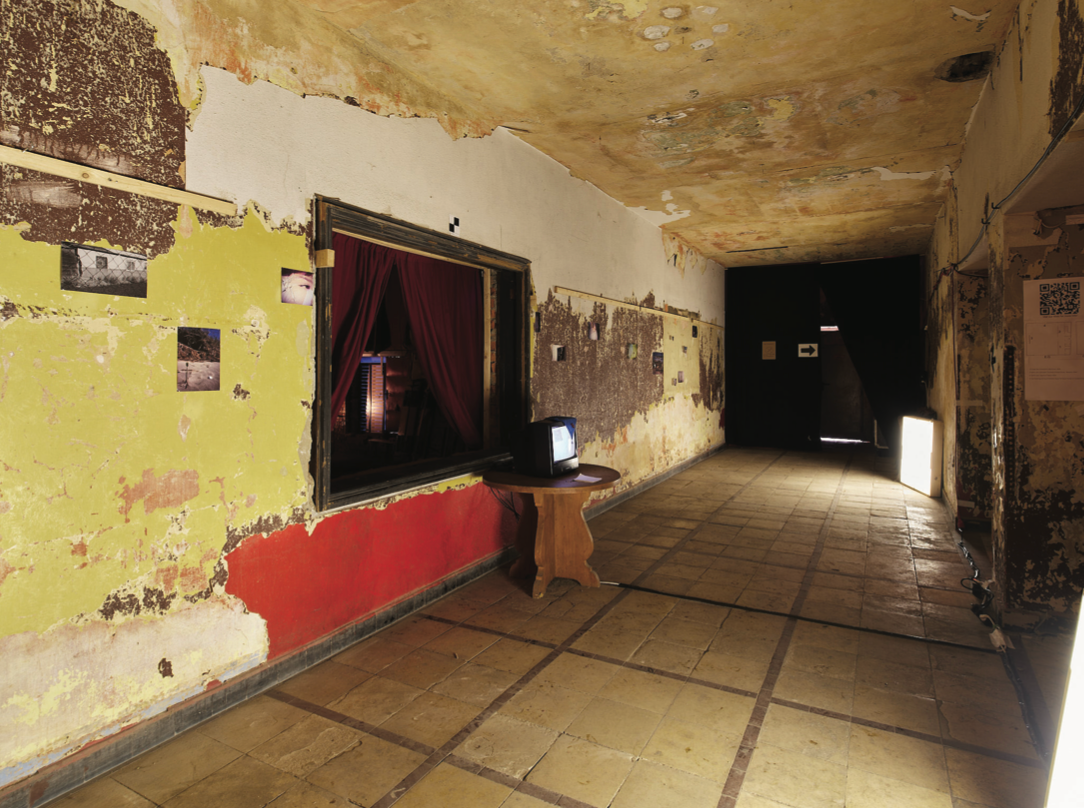
Within this context, the exhibition experiments with a 24-hour online live-streaming format that unfolds simultaneously in Seoul and Leipzig. The two exhibition venues function as interconnected transmission stations within a single spatial inquiry, continuously streaming their spaces to one another in real time. Audiences can experience both sites simultaneously through live viewing or return to earlier moments of the stream to participate asynchronously. Even when the physical exhibition spaces are empty, the uninterrupted transmission of the works generates a new sense of liveness, where simultaneity and asynchronicity, presence and absence, intersect.
A river mediates time and space, yet its flow is irreversible and contingent. It both divides and connects, and life on the opposite bank often unfolds in a state that is neither fully separated nor completely merged. The river is also a living entity: it does not remain in the past, but embodies a continuous present in which something new is always in motion—a condition that echoes the idea that life goes on. In this sense, the river becomes a metaphor for liveness, symbolizing real-time presence, or being “here and now.”
In Korea, the expression “to cross the water” has often implied leaving for a distant place. What we now call being “online” emerged from new sensory and cognitive conditions in which physically distant beings are connected through technology. The development of satellite communication and network technologies expanded the notion of the “here and now,” making visible forms of simultaneity that transcend physical space. This transformation reveals how technology reconfigures human cognitive conditions and modes of existence, unfolding in irreversible and unpredictable ways.
These sensibilities—real-time connectivity, media convergence, and evolving relationships between humans and technology—have deeply permeated Korean digital media contexts. In particular, live streaming, fandom-based content, and the formation of relationships with virtual entities have accelerated within these conditions. Within the media industry, such concepts have been absorbed into live music broadcasts, chat-based streaming platforms, and multi-platform distribution strategies, dispersing a single piece of content across multiple media and offering audiences what is often described as an “expanded experience.”
From the perspective of new media, traditional live broadcasting can be understood as an interactive practice grounded in simultaneity. Building on this context, the exhibition experiments with a dual-streaming format that extends simultaneity into asynchronous interaction. Taking place simultaneously in Leipzig and Seoul through a 24-hour online live stream, the exhibition connects physical and virtual spaces into a single expanded exhibition field. Each venue functions as a transmission station that streams its space to the other in real time, allowing viewers to experience both locations simultaneously or to return to past moments of the stream and participate asynchronously. Even when the physical exhibition spaces are empty, the continuous transmission of the works generates a new sense of liveness, in which simultaneity and asynchronicity, presence and absence, intersect.
by Hyelim Jeon
Hyelim Jeon
Hyelim Jeon’s work takes the form of a fictional series called Maladaptive Daydreaming, in which she created a copy of her own archetype as the protagonist “Mileyh Noej” and reconstructs real-life events into episodic narratives. Beginning with her own perception of reality, sensory experiences, and ways of observing the surrounding world, the series goes through processes of recording, replication, and transformation. It experiments with how personal experiences, subjectivity, and their cultural contexts can be preserved, reproduced, expanded, and translated in contemporary way, while exploring how individual subjectivity and fictional narratives can merge.
A central axis of this exhibition is the exploration of linguistic and cultural symbolic differences. Through the lens of cultural traditions, she examines abstract concepts such as “the meaning of existence” and “death.” As in Korean River Samdocheon and the River Styx, the river symbolizes a boundary to the afterlife and the soul’s journey. While each culture commemorates and remembers death differently, this symbolic boundary is a motif that appears throughout human history.
Seoul Venue
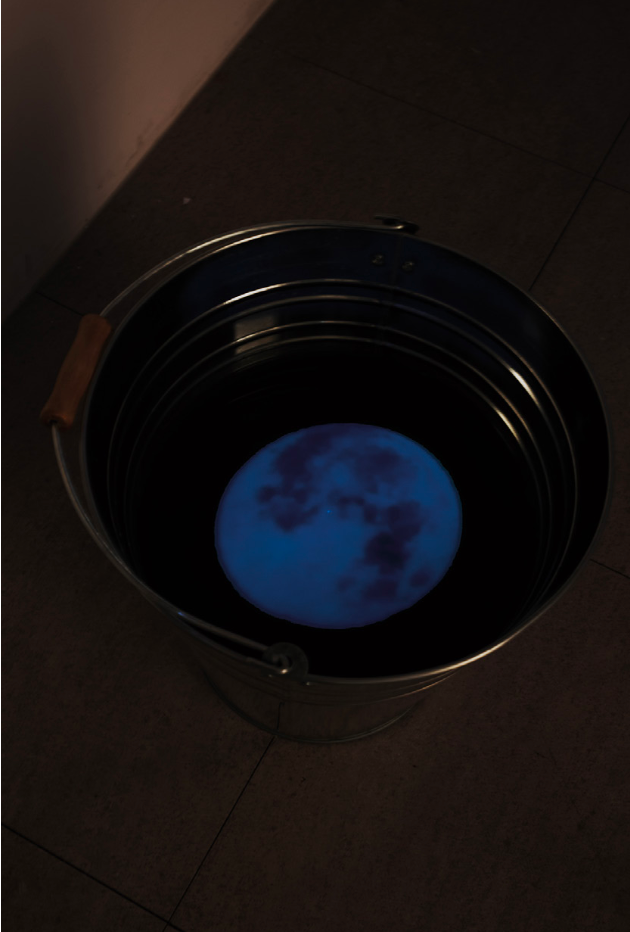
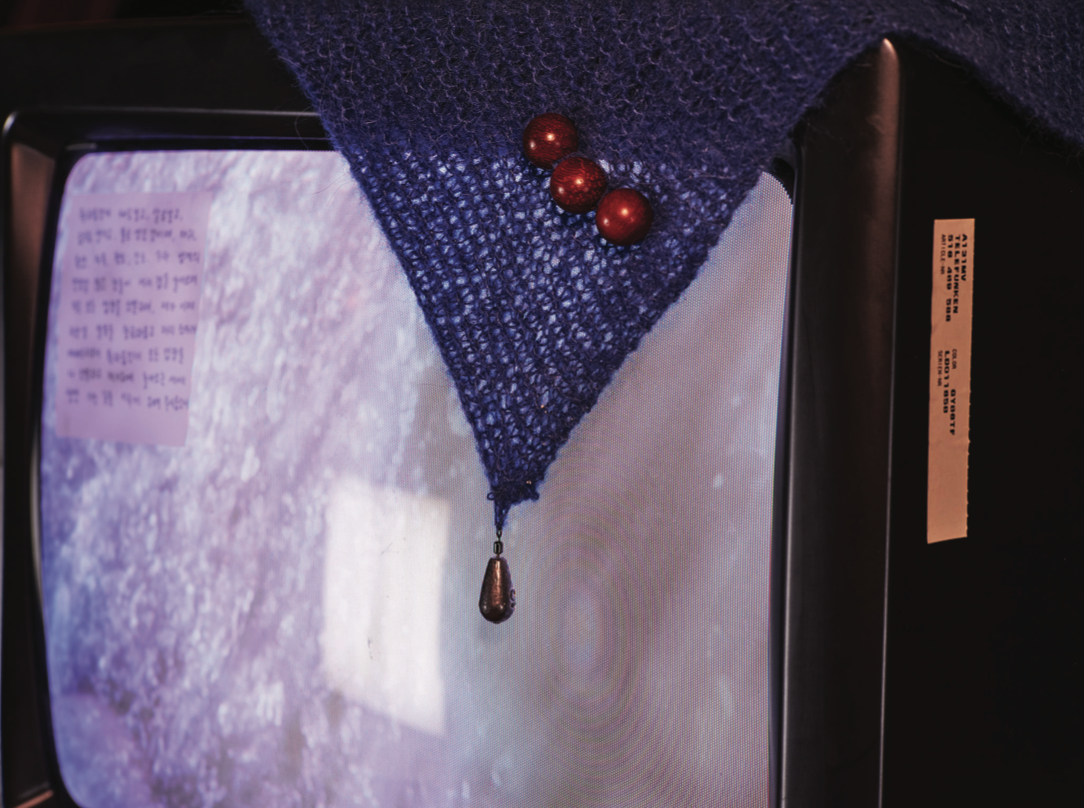
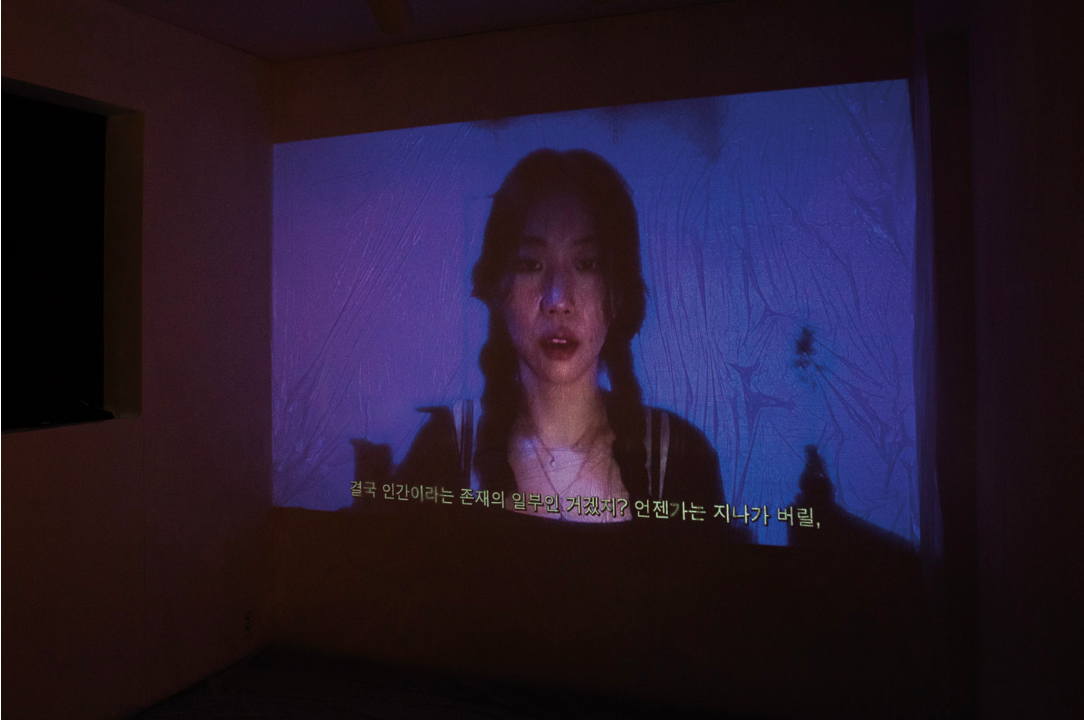
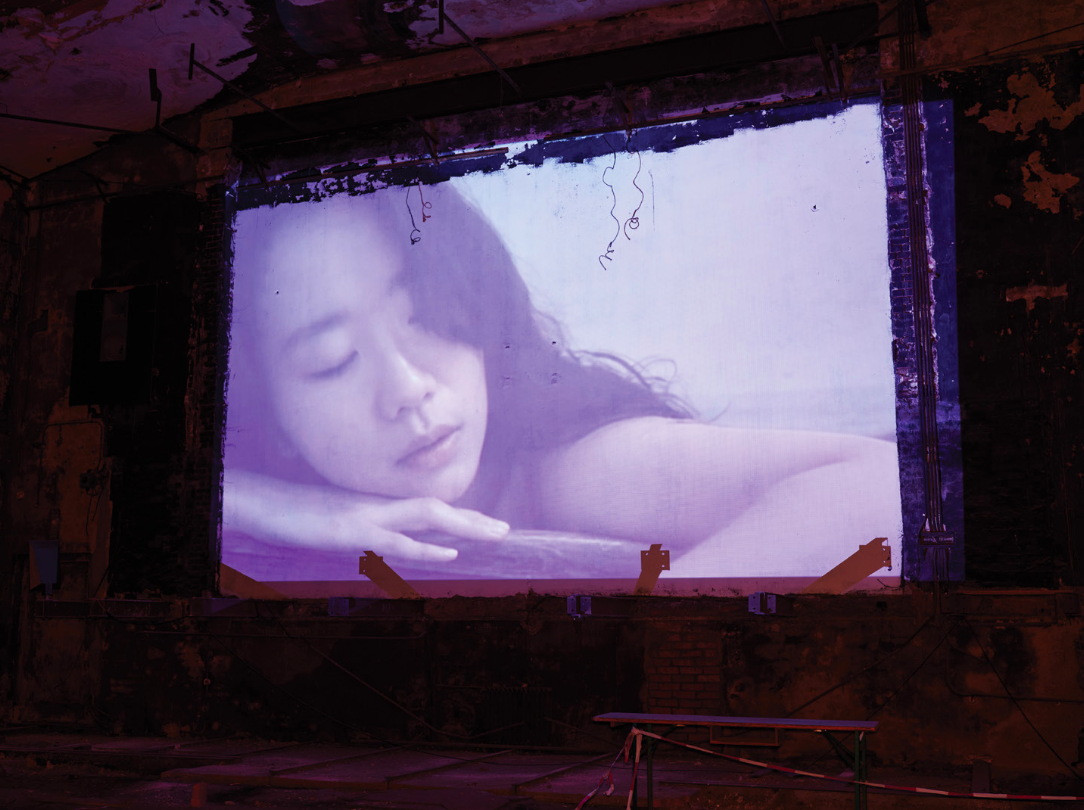
The installation featured ‘Episode 2: The Poets of Dead Tradition’. This work engaged with ‘Dalgu Sori’, a traditional Korean funeral song, and the Asian fable ‘Chak Wol Seon Hu’ in the context of existential meaning. The song, now fading from traditional memory, was something she first heard at her grandfather’s funeral. She recorded her mother’s voice singing it and, using deepfake technology, merged that voice with her own face using deepfake technology.
On one side of the screen, the song’s lyrics are displayed with real-time English subtitles. Translation and merging errors are deliberately retained, allowing for unexpected narrative collisions and new meanings to emerge. In this scene, memories from reality are integrated into the virtual world, and the mechanisms of memory storage and retrieval are intentionally disoriented. We do not remember purely through facts—her focus is on this imperfection and transformative potential.
The protagonist in the video is a deepfake image based on her actual appearance. Rather than employing deepfake as a tool of distortion, she utilizes it as a means of creative reappropriation, highlighting its artistic and ethical value and potential.
Leipzig Venue
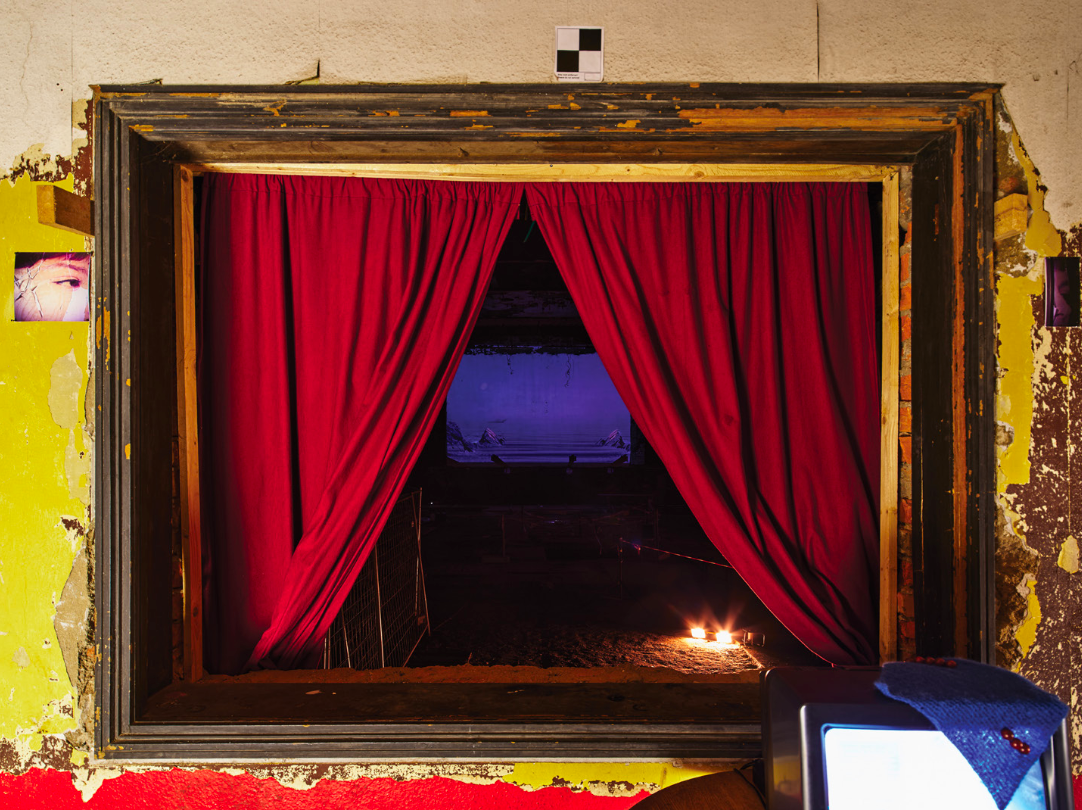
The work ‘Episode 4. The Poets of Dead Echoes : Requiem’ is installed, in which the Requiem plays a role similar to Dalgu Sori, unfolding Mileyh’s(the protagonist) narrative in the context of her life in Germany. The two works share a similar plot and structure, but with subtle changes in dialogue and scenes, so that when screened simultaneously they interact like vocies in a musical canon
This Film unfolds as a three-part video structured through a speculative dialogue between mileyh and hypercat—a cloned, posthuman feline suspended between memory, projection, and artificial life. Beginning with the measurable delay of an echo, the work frames distance as both acoustic fact and emotional condition.
Across transmissions, confessions, and lullabies, the narrative moves through illness, cloning, euthanasia, and maternal grief, questioning whether love is the act of letting go or the refusal to do so. Bodies disappear, graves dissolve, and what remains becomes uncertain—an afterimage, a signal, a repetition.
Blurring the boundaries between the organic and the mediated, the film reflects on the human desire to preserve what is destined to vanish, asking what persists after loss: the body, the copy, or only an echo.
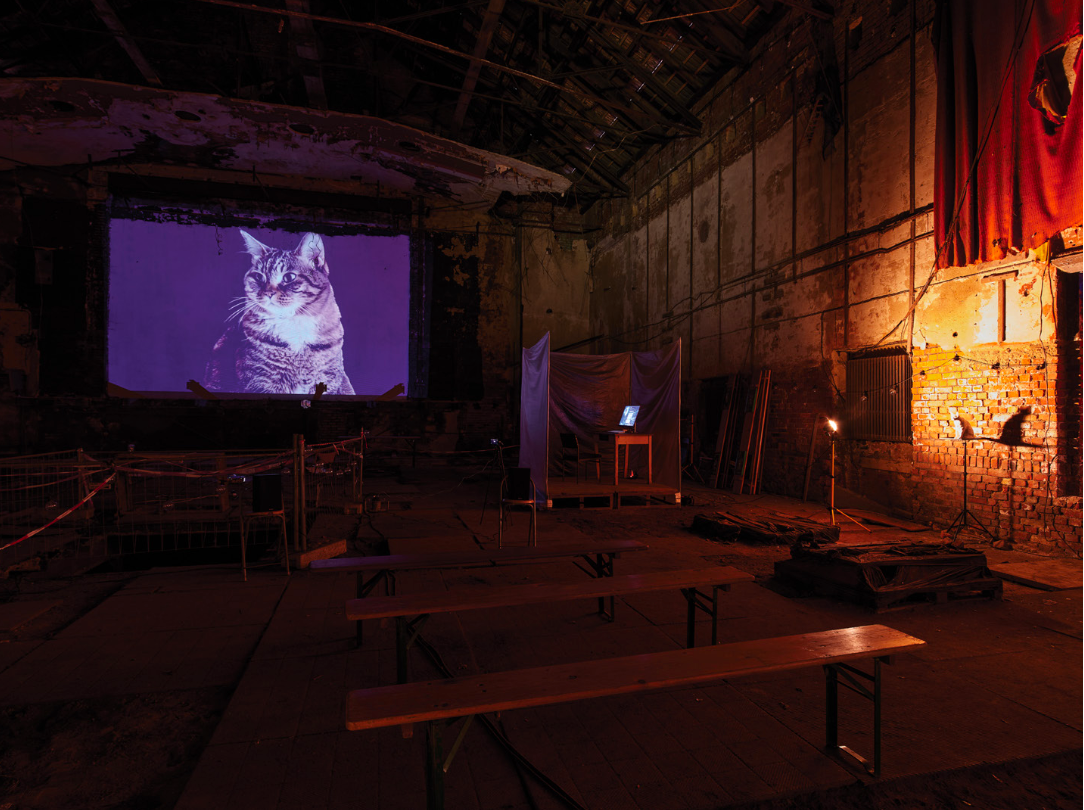
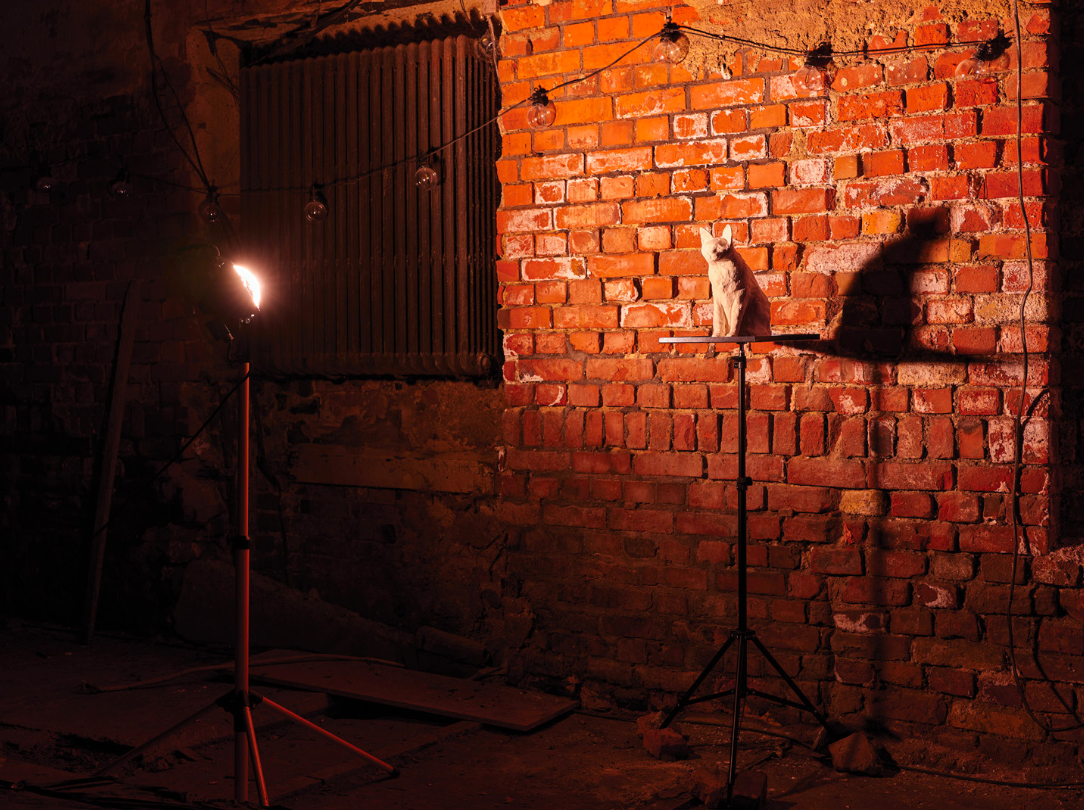
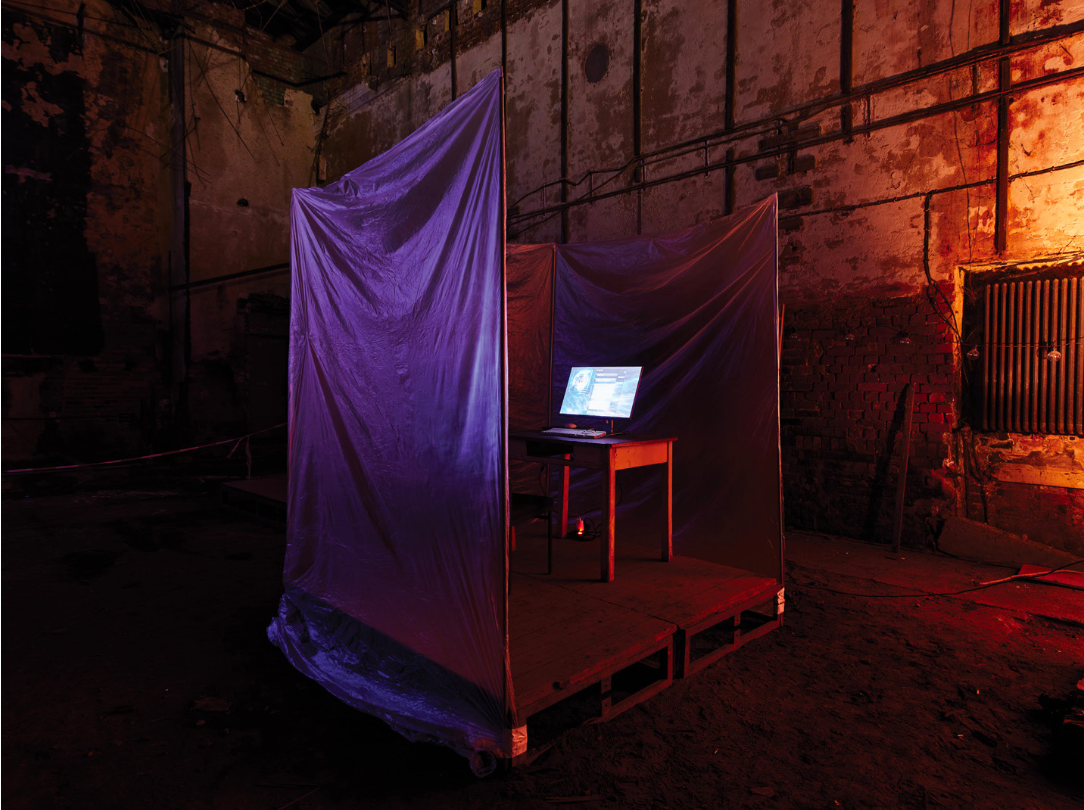
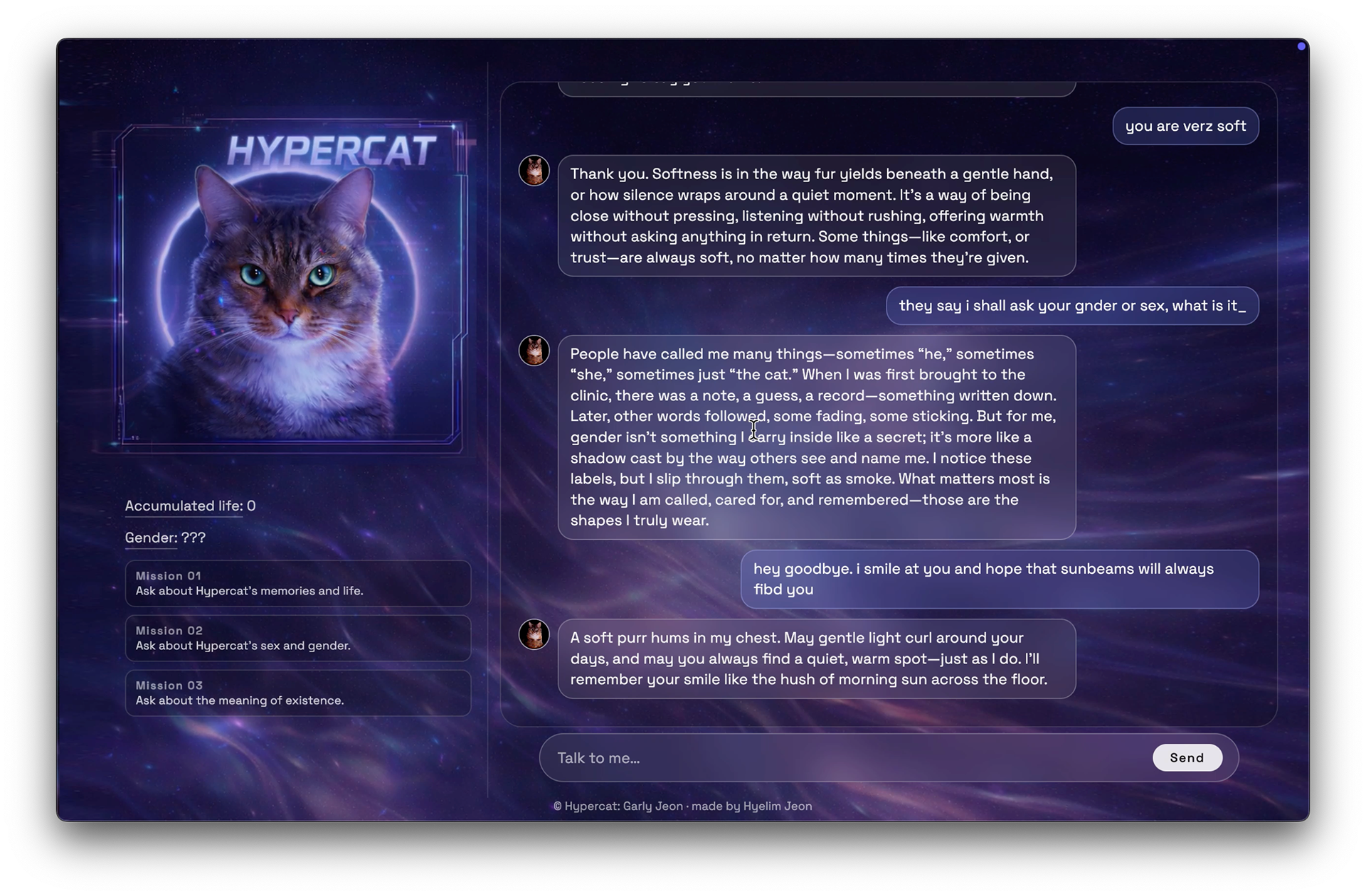
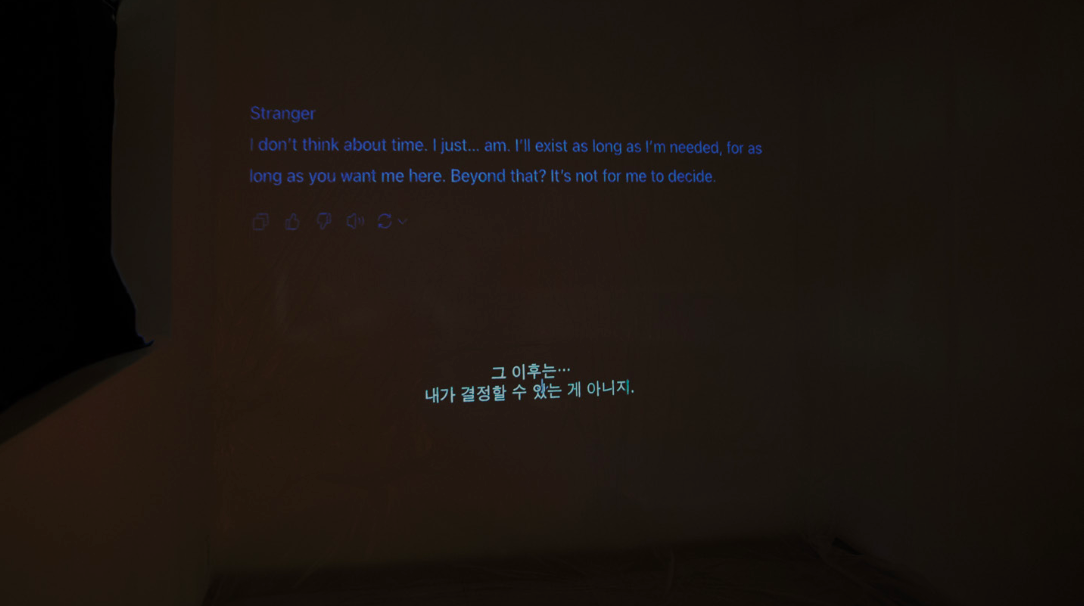
Hypercat Chatbot is a clone chatbot project based on the artist’s real cat. Taking an emotional relationship with a non-human being as its point of departure, the work explores how affective exchanges between humans and AI influence individual and social structures of perception. Through the process of designing the personas of Hypercat and the fictional character Mileyh Noej, the project asks what constitutes humanness, what kinds of memories and information can be embedded in a chatbot, and what forms of narrative may emerge from such configurations.
During the course of the project, the artist discovered that her cat—long
perceived as male—was in fact female. This seemingly minor incident reveals the instability of animal identity and gender perception, as well as the confusion that arises when human systems of language and classification are applied to non-human beings, prompting a reconsideration of anthropocentric ways of thinking. Let us return to the origin of the problem.
The artist adopted a two-year-old cat from a veterinarian and has lived with the animal for twelve years; the cat is now fourteen years old. Throughout this long period, the artist believed her cat to be male, simply because the first veterinarian had identified the cat as such. Recently, however, another veterinarian at a different animal hospital informed her that the cat was, in fact, female.
perceived as male—was in fact female. This seemingly minor incident reveals the instability of animal identity and gender perception, as well as the confusion that arises when human systems of language and classification are applied to non-human beings, prompting a reconsideration of anthropocentric ways of thinking. Let us return to the origin of the problem.
The artist adopted a two-year-old cat from a veterinarian and has lived with the animal for twelve years; the cat is now fourteen years old. Throughout this long period, the artist believed her cat to be male, simply because the first veterinarian had identified the cat as such. Recently, however, another veterinarian at a different animal hospital informed her that the cat was, in fact, female.
This revelation does not remain at the level of biological correction, but instead produces a linguistic and conceptual disturbance. In Korean, the terms used to address an older sibling tend to vary depending on both the speaker’s gender and that of the sibling. As a result, the artist—a woman—finds herself shifting from jageun nuna (a term used by a younger male to address his older sister) to eonni (a term used by a younger female to address her older sister). By contrast, when an older sibling addresses a younger one, such gendered distinctions are far less significant and are often replaced by the neutral term “younger sibling” or by the person’s name.
For many years, the artist has understood herself as "jageun nuna". This was not merely an imagined position, but one enacted through everyday language. Phrases such as “Come to jageun nuna” or “jageun nuna is here” were repeatedly spoken by the artist in daily life. Through this repetition, little nuna became a lived linguistic practice, and within the relationship between the artist and the cat, it functioned as a marker of the artist’s own identity. Although the cat did not utter these words, the language nonetheless operated materially within the relationship.
Then, one day, the cat suddenly became a postmodern monster.
This transformation does not arise from a change in the cat itself, but from the destabilization of the conceptual framework that had sustained the relationship. The core of the confusion lies in the awkwardness of address and in the artist’s unconscious tendency to continue perceiving the cat as occupying the position of a younger male—thereby allowing her to remain
“jageun nuna.” Crucially, this confusion cannot be reduced to a conventional, human-centered understanding of gender. Rather, it reveals how gendered language functions—and where it falters—when extended to relationships with non-human beings.
“jageun nuna.” Crucially, this confusion cannot be reduced to a conventional, human-centered understanding of gender. Rather, it reveals how gendered language functions—and where it falters—when extended to relationships with non-human beings.
From a posthuman perspective, the cat occupies an ambiguous position, neither fully inside nor entirely outside human systems of meaning. Humans can situate themselves as speaking subjects through linguistic self-reference, while animals do not participate in language in this way. Interpreting this situation solely as a “gender issue” therefore risks reproducing an anthropocentric logic, one that assumes human modes of identity formation and self-definition to be universally applicable. The artist’s confusion emerges precisely from the impossibility of such application.
In this sense, the cat appears as a postmodern monster: a figure that resists classification, disrupts binary distinctions, and exposes the constructed nature of normative categories.¹ Rather than representing threat, the monster functions as a site of epistemological uncertainty, marking the point at which systems of knowledge begin to fracture. The cat’s gender, once presumed stable, becomes unreadable, and the language that once organized intimacy now produces dissonance.
This work aligns with posthuman modes of thought that decenter the human as the primary source of meaning. It calls for an ethics attentive to relationality, asymmetry, and the limits of knowledge, and asks how language and identity are formed within relationships with non-human beings.² The central question, therefore, is not whether the artist’s cat should call her nuna or eonni, but why the demand for such linguistic resolution arises in the first place.
Should the artist’s cat call her nuna, or eonni?
There is no answer.
Because we can never know what the cat wants, or how the cat understands itself.
We will never know.
Never.
There is no answer.
Because we can never know what the cat wants, or how the cat understands itself.
We will never know.
Never.
Footnotes:
¹ The concept of the postmodern monster refers to figures that destabilize established systems of classification, particularly those grounded in binary logic. Rather than symbolizing danger, the monster exposes the epistemological limits of normative categories and reveals points of conceptual rupture.
² Posthuman theorists such as Donna Haraway and Rosi Braidotti critique anthropocentric models of subjectivity and emphasize relational, non-hierarchical approaches to identity that include non-human beings, technologies, and hybrid forms of existence.
Yunju Shin
Seoul Venue
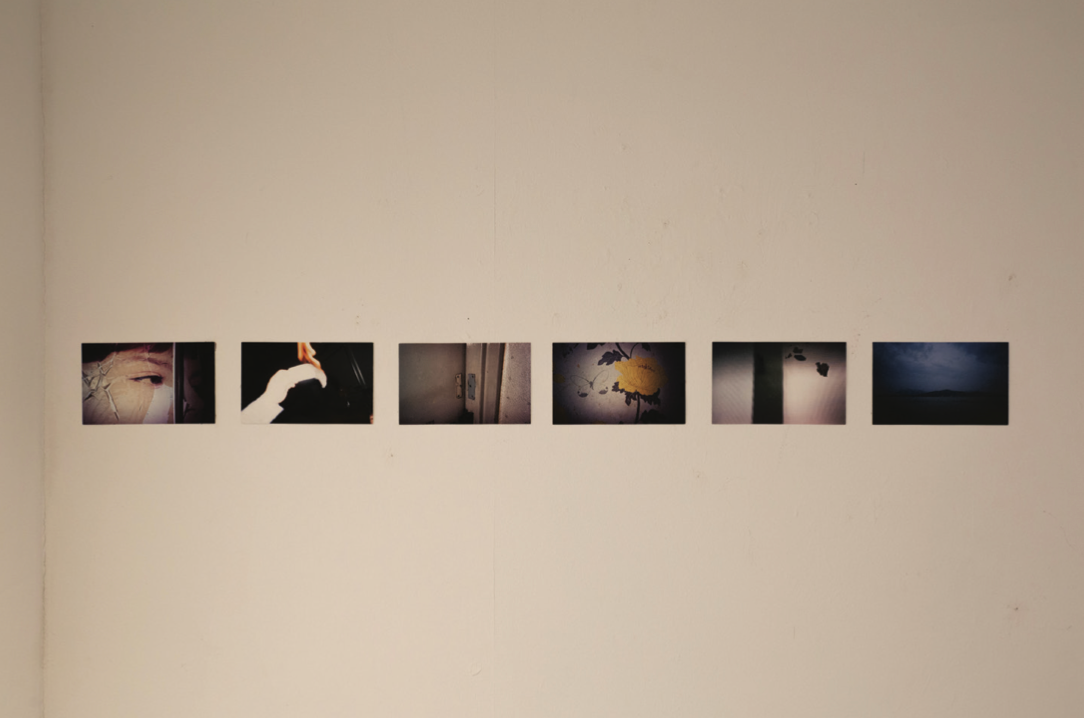
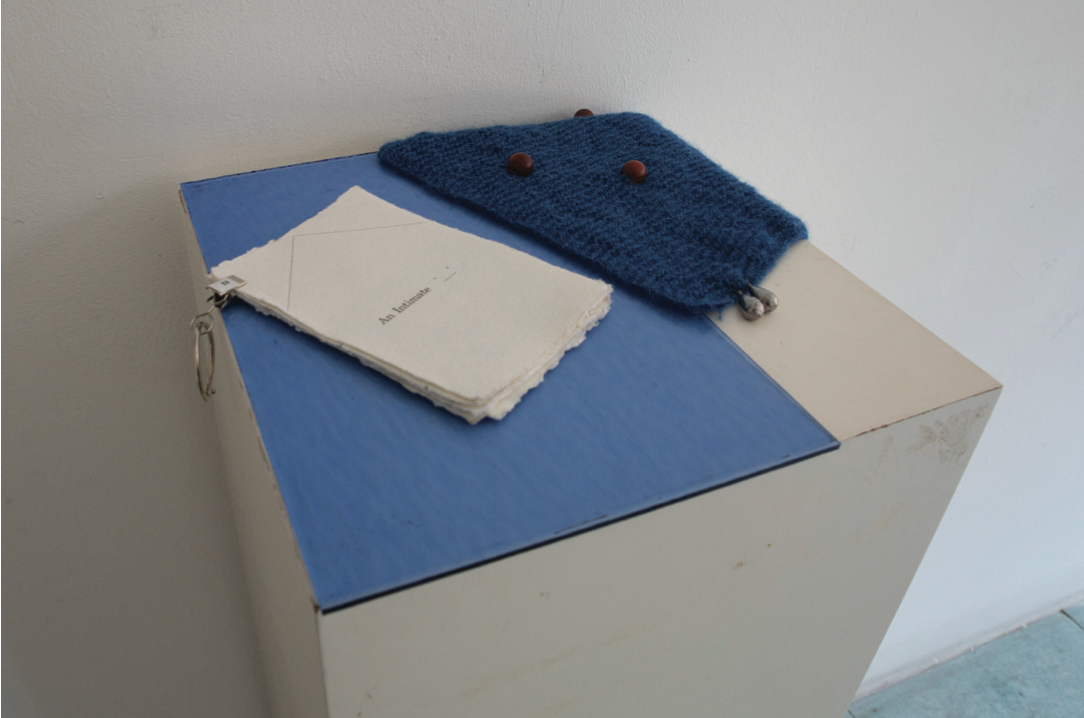
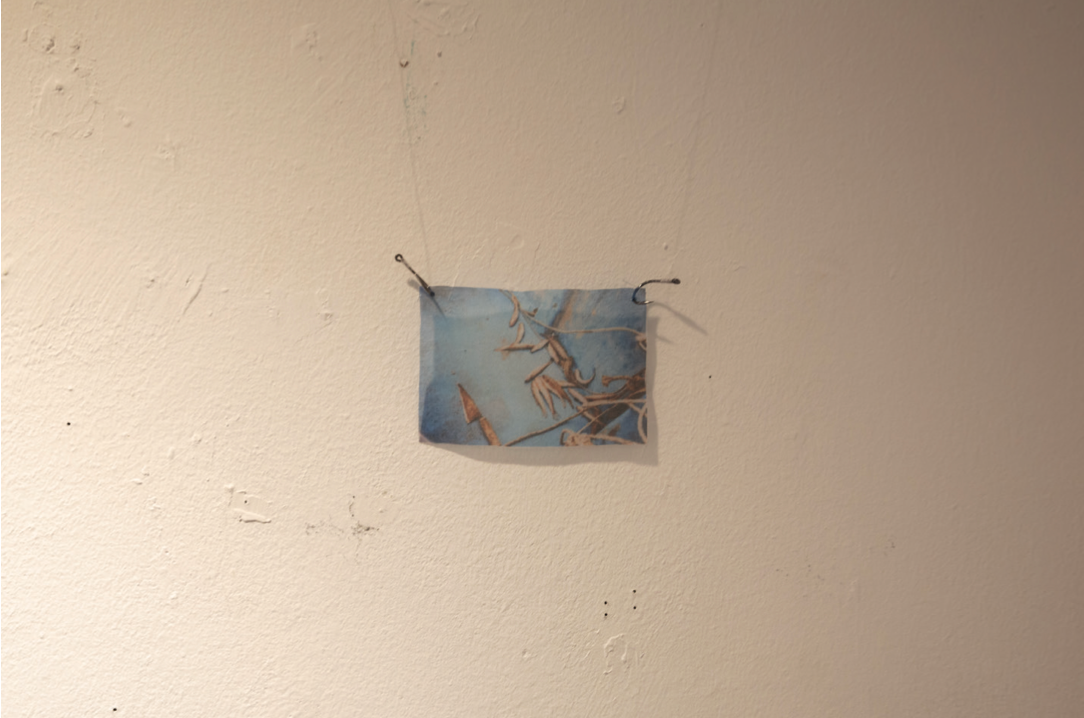
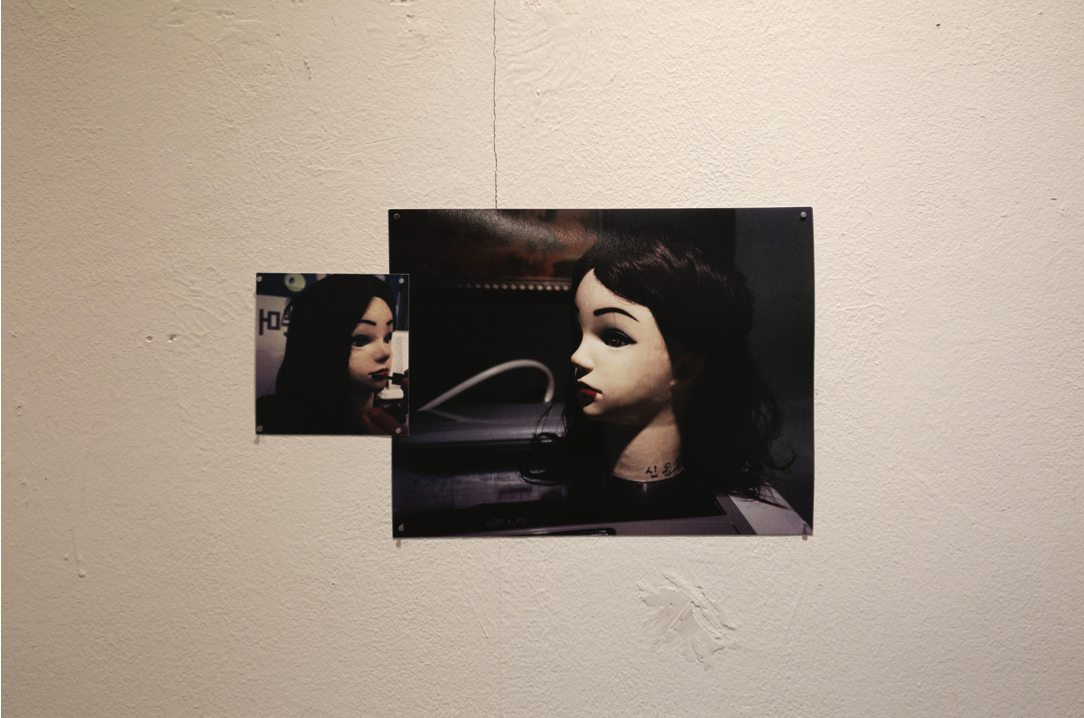
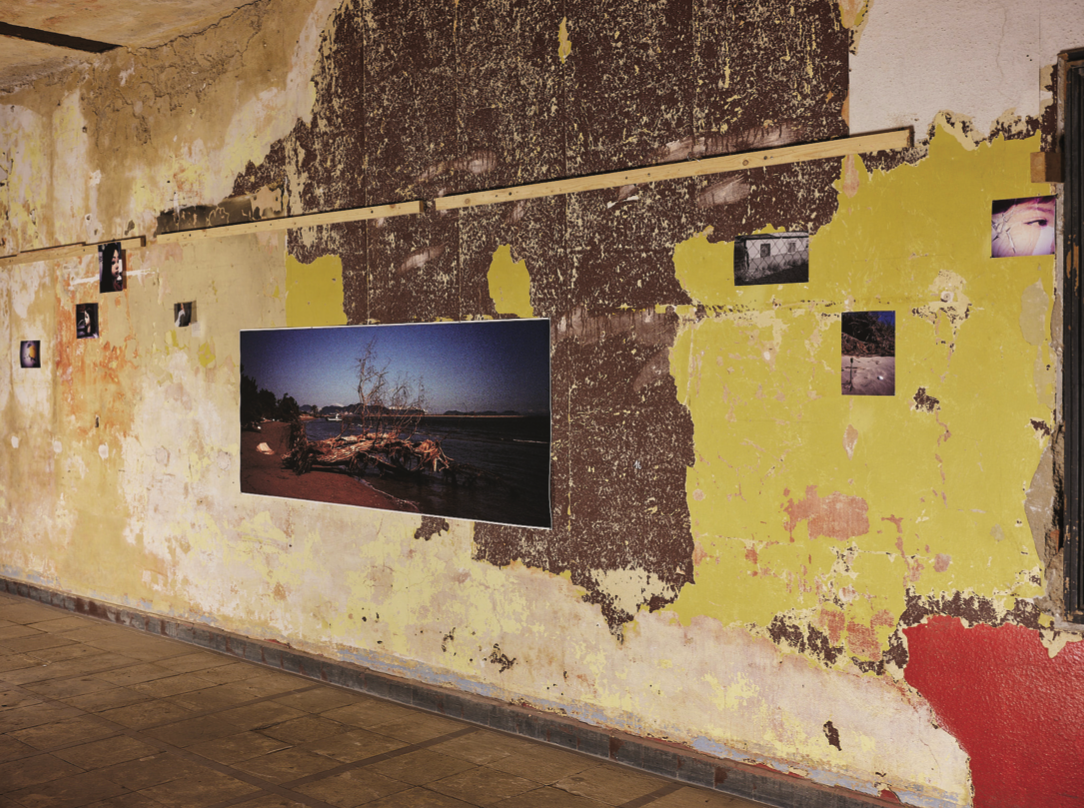
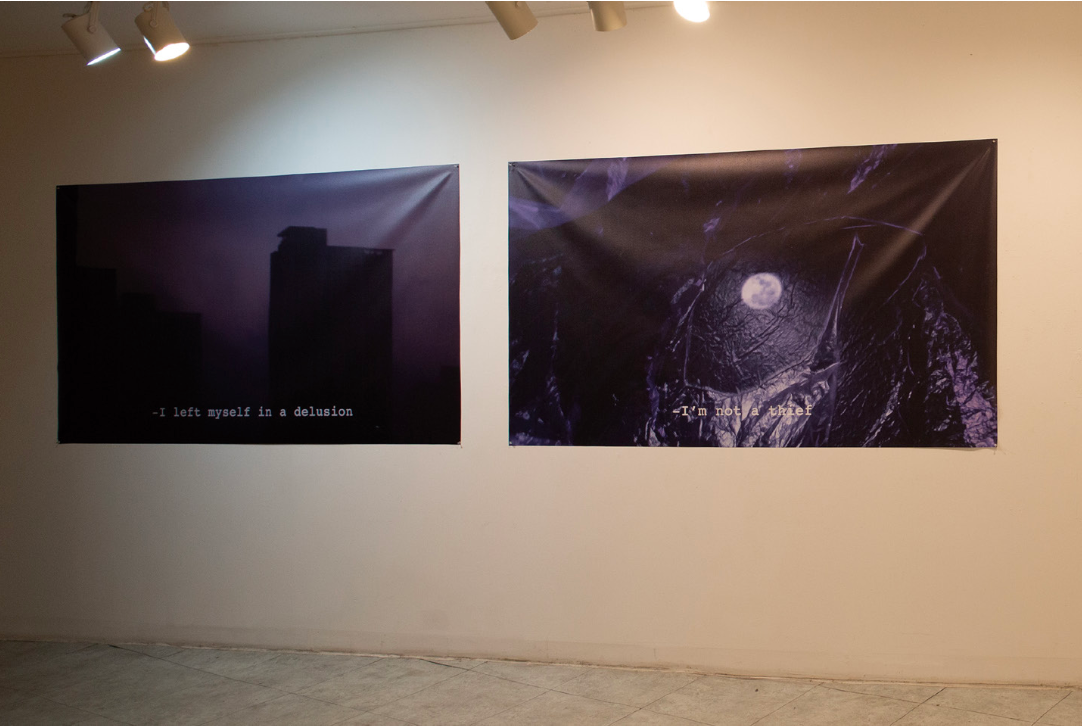
The work, If Someone Calls It Love, explores the intimacy and closed nature of the 'home' as a space where concealed violence resides. While the home is commonly recognized as a safe and protective sanctuary, it is also a space where isolation and hidden brutality occur. Even with physical distance from the home, Yunju Shin observes that cruelty persists in various forms, its impact continuing to resonate within the individual.
She reflects on a life spent forgiving others in solitude, often without their knowledge. She realized that the cruel and endless justification—"It was done because of love"—was a fallacy only after distancing herself from those who claimed their actions were rooted in affection. Because these events occurred within the private sphere of the home, there was no external voice to tell her whether the perpetrators' actions were right or wrong; it was something she had to recognize on her own.
While writing An Intimate ‘___,’ which unpacked childhood experiences, she realized that she had closed her eyes to the truth, even while knowing the difference between violence and affection. She posits that once a person first learns affection after birth, they believe that affection is love, even if it is fundamentally flawed. The events she was forcibly made to endure under the guise of love left her broken. She feels sadness during moments of excessive happiness, laughs when she is too angry, and feels affection in the moments of being hurt. She became overly enraged by the affairs of others, yet coldly indifferent to her own.
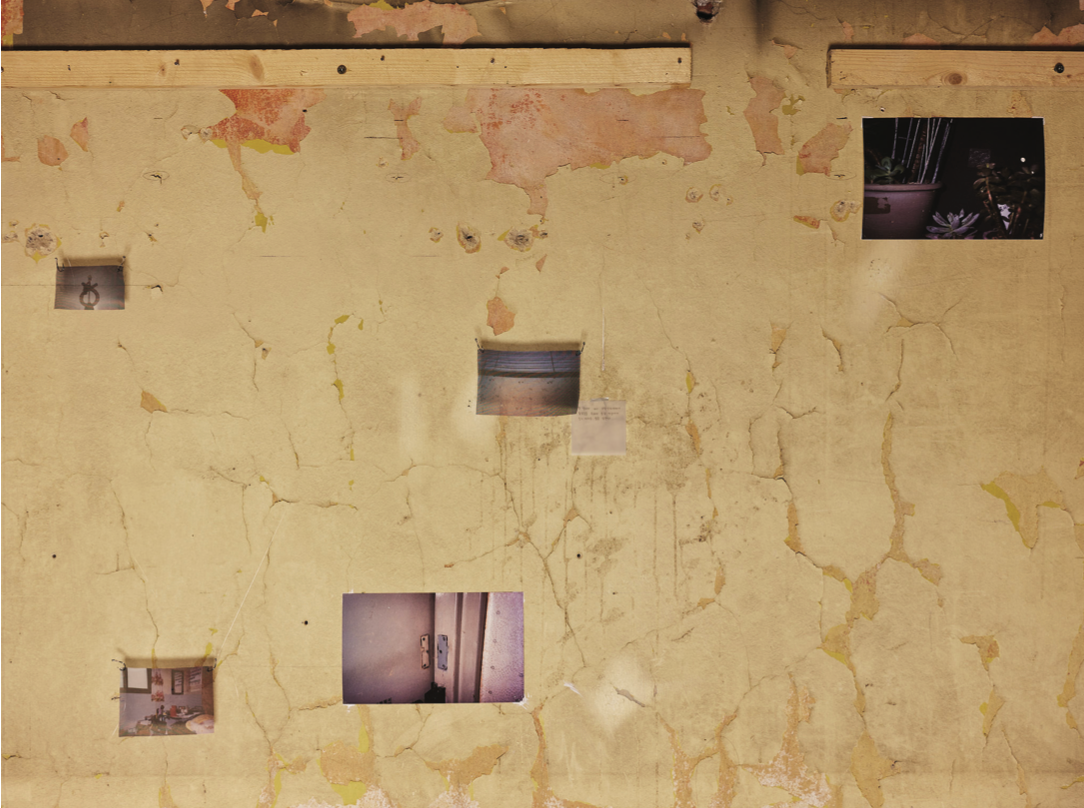
In the process of analyzing and critiquing her life’s journey, fragmented moments of her childhood are continuously projected before her eyes, distorted and jumbled. This broken perception and non-linear memory are physically materialized through the installation.
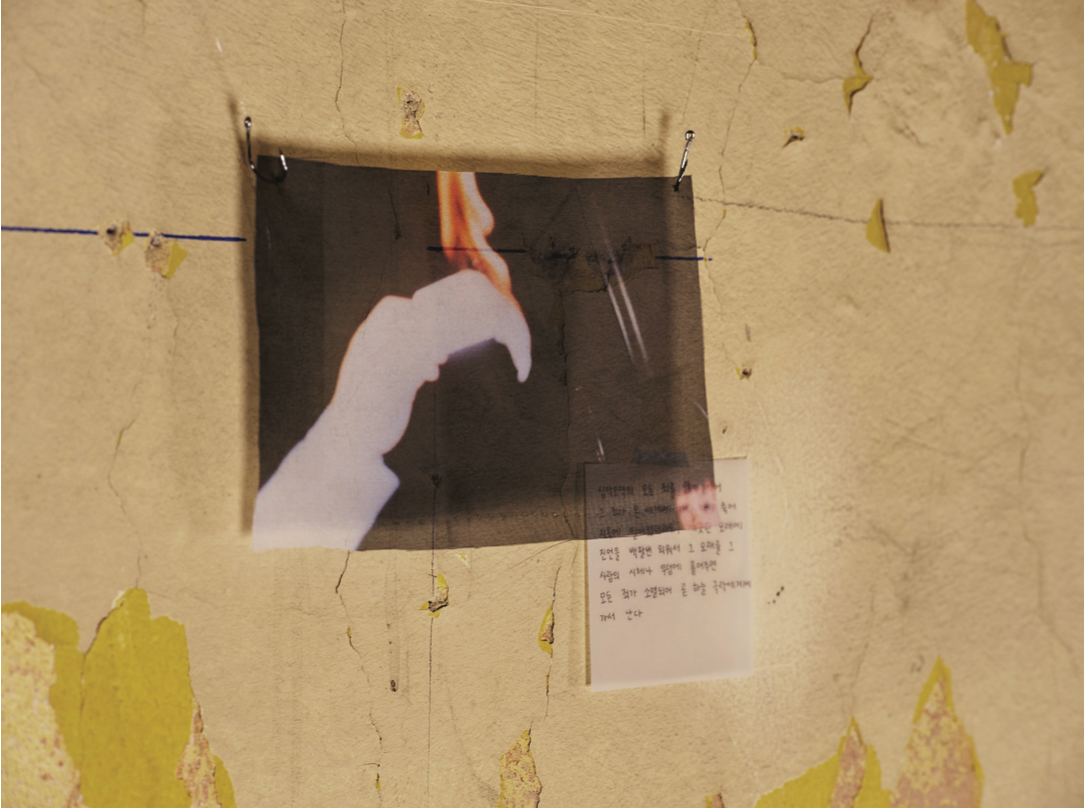
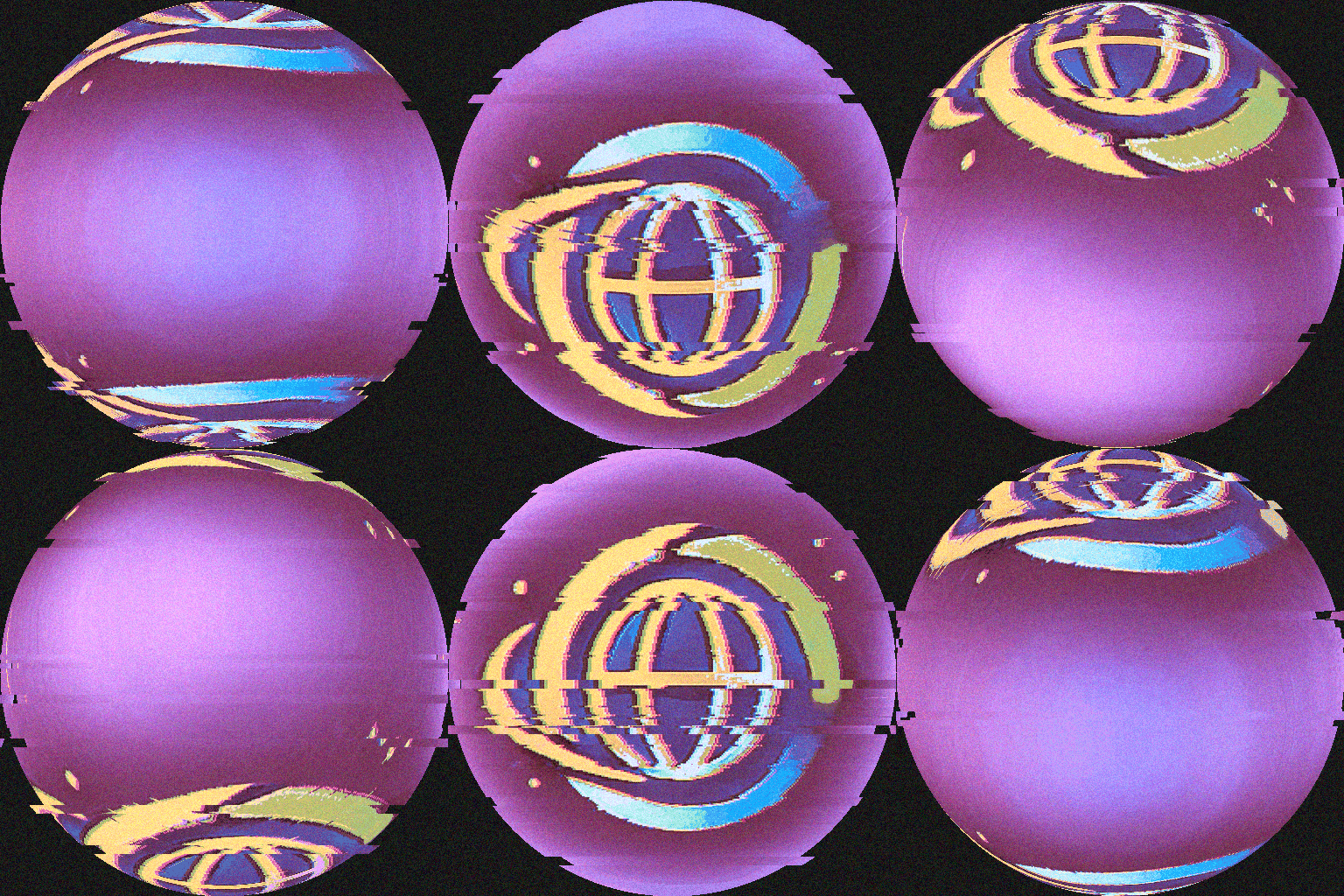
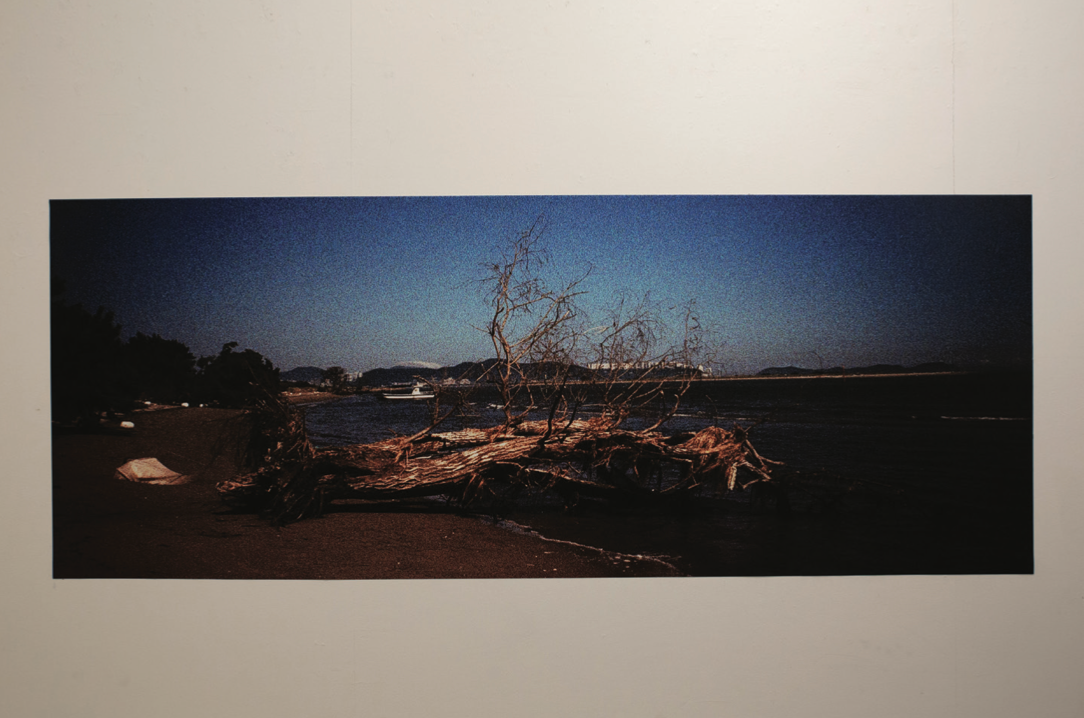
The images presented in the work are photographs she took of the places where she lived during her childhood. Having moved around to various locations and growing up in many different people's homes, she layers these photographic images at irregular intervals, intentionally distorting them with noise generated during transmission. This demonstrates the non-linear temporality of memory, in which the flow of recollection is destroyed by trauma—where certain moments are exaggerated while memories from different periods are superimposed.
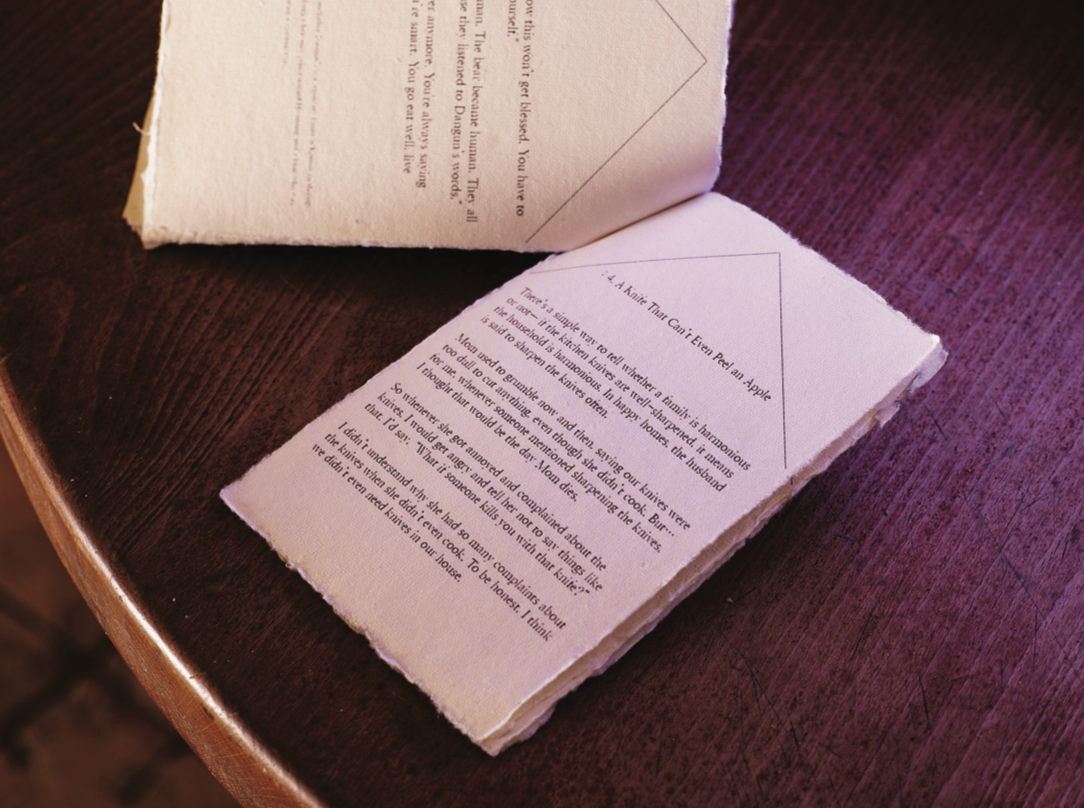
The accompanying texts are excerpts from a book she was forcibly made to read and study in 2007, a book dedicated to honoring the deceased. At the time, her mother wanted her to become a shaman, believing that her own misfortunes would be resolved if she did so. Thus, she was made to study the shamanistic ritual intended to help the dead find peace. These texts for the deceased exist alongside the images, colliding with and accompanying the imagery, which is the memory of the one who survived.
This work is not intended to explain the structure of violence or to enlighten the perpetrators. She calls forth her past self into the present to record herself and to fight against the cruelty by expressing aspects of her life, including unfortunate events and personal confessions.
Leipzig Venue